Triggering elements in the built environment
The built environment encompasses the human-made surroundings where people live, work, and play. It includes physical structures like buildings and infrastructure such as roads, water systems, and transportation networks. The built environment interacts with and impacts the natural environment, influencing everything from health and well-being to the planet's ecosystem.
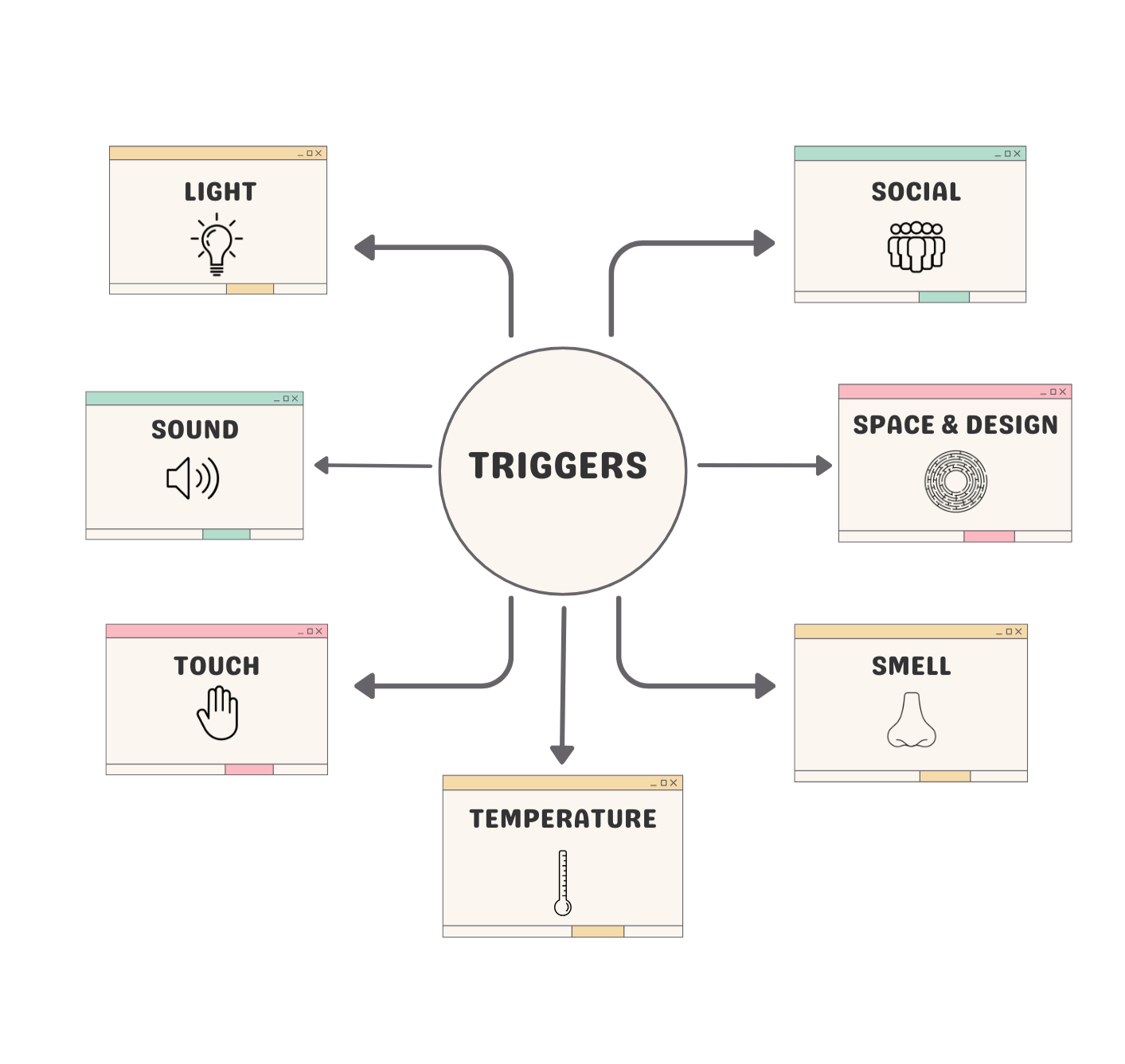
In buildings, neurodiverse individuals may be triggered by various sensory elements and spatial characteristics. These can include bright or flickering lights, loud or harsh noises, crowded spaces, and certain textures or smells. Additionally, design elements like excessive visual clutter, repetitive patterns, and a lack of clear wayfinding can create challenges. Some neurodivergent individuals may also struggle with social interactions in certain spaces or environments, leading to stress and anxiety. The sensory overload can lead to emotional dysregulation.
Potential triggers:
Light – bright or fluctuating lights
Sound – noise, reverberation, loud and disruptive sounds, loud machinery, light ballast hum
Touch – sensitivities to fabrics, textures, and materials
Smell – odours, perfumes, strong cleaning products
Spatial and design challenges
Visual clutter – multiple unstandardised signage, multi-patterned space, cluttered spaces
Repetitive patterns – tessellations, stripes
Lack of clear wayfinding – unclear signage
Unfamiliar spaces - sudden changes in space
Social interaction – noisy spaces, crowded spaces, sudden changes in schedule and people
Thermal comfort – too hot or too cold