
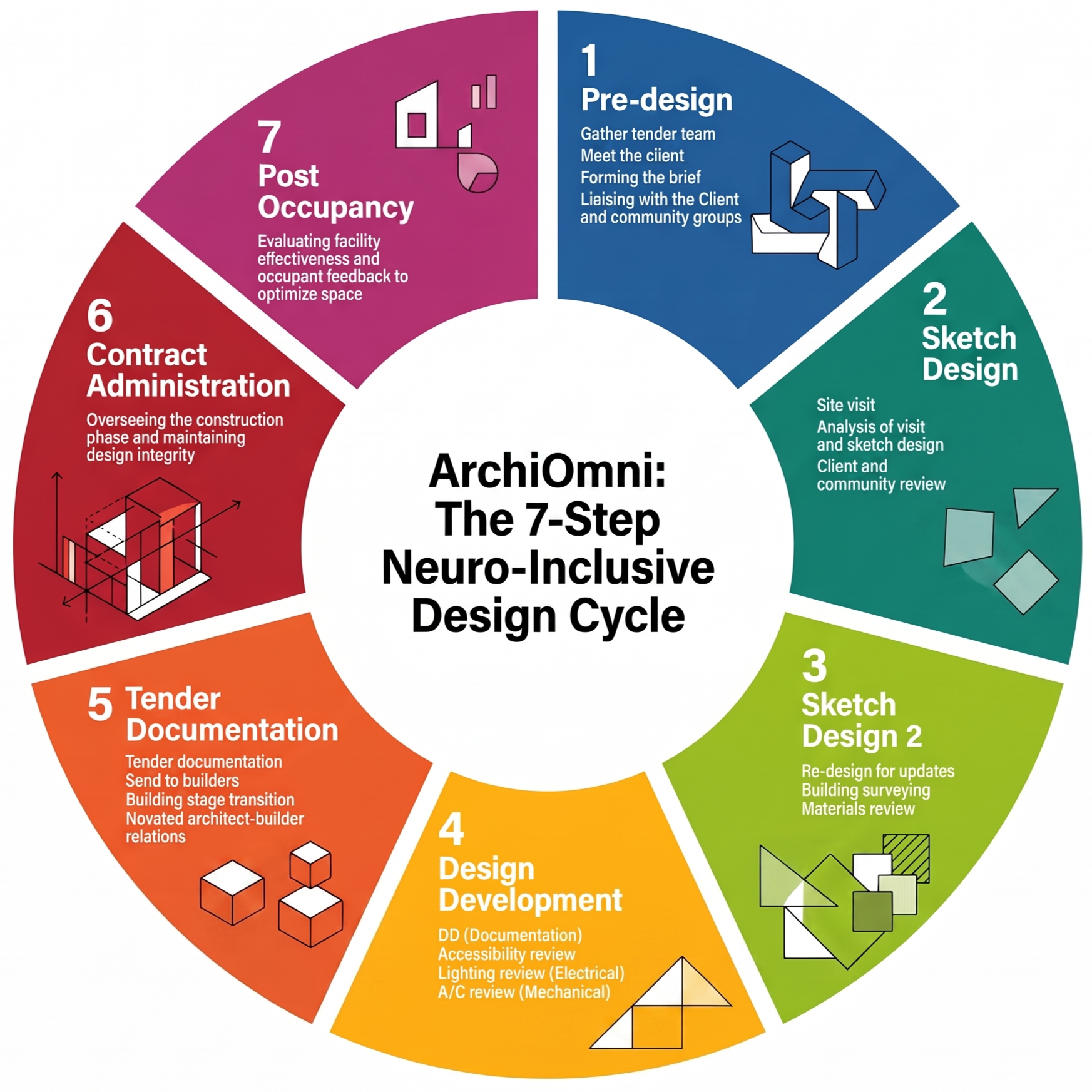
1. Pre-Design (Tender Support & Briefing) Architects utilise this to strengthen tender submissions with specialist capability statements, ensuring early alignment of neurodiversity requirements through stakeholder engagement and identifying potential triggers before the formal design phase begins.
2. Sketch Design (Site Analysis & Concept Review) This service helps architects identify sensory triggers during initial concept development through site analysis and reviews, allowing for the timely inclusion of essential features like acoustic zoning and lighting.
3. Sketch Design 2 (Concept Review, Materials/Finishes Review) This review is to avoid specifying overwhelming patterns or colors that act as triggers, ensuring the finishes schedule aligns with neuro-inclusive standards and supports a calming environment.
4. Design Development (Technical Oversight) This provides technical oversight of inclusivity, accessibility, and services documentation, ensuring compliance with neuro-inclusive benchmarks for lighting and acoustics to mitigate the risk of "invisible" triggers like flicker or noise.
5. Tender Documentation (Audit & Compliance) Architects use this to protect design integrity during procurement by comparing tender documents against the brief, identifying any alterations that could compromise the project’s neuro-inclusive and sensory outcomes.
6. Contract Administration (Construction Monitoring) This ensures design intentions are accurately implemented on-site by monitoring construction and conducting site visits, giving architects confidence that the finished project maintains its required neuro-inclusive quality.
7. Post Occupancy (Occupant Feedback) This provides collation of occupant feedback to inform the architect elements that require improvement for that specific and future projects.