
The five plus three senses
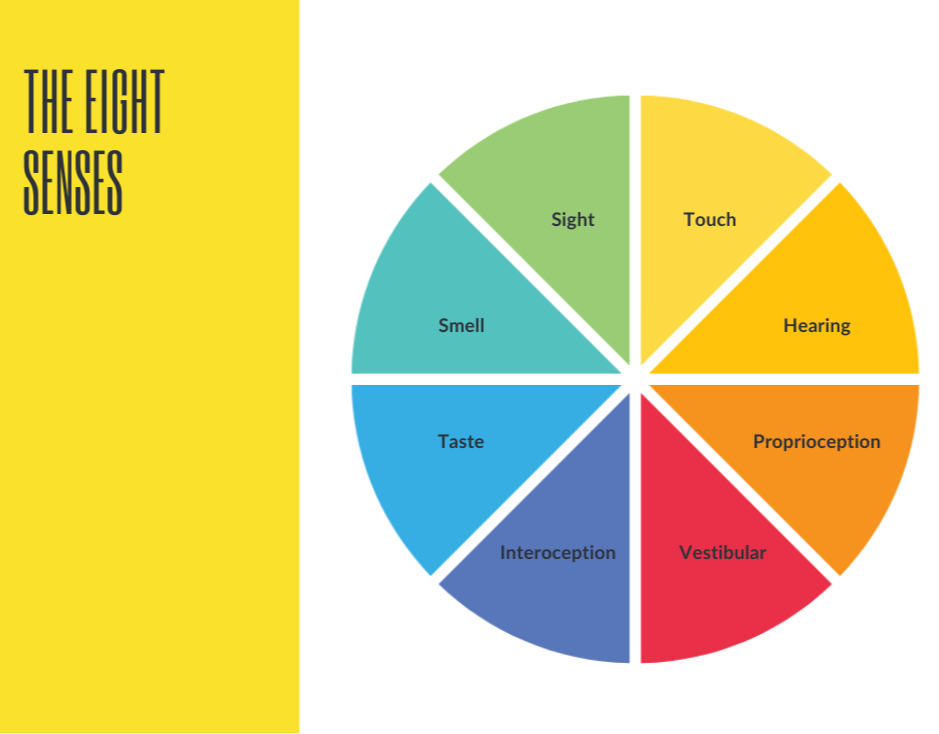
There are five exteroception senses we are acquainted with. These are sight, touch, hearing, taste, and smell. These senses the external world.
There are three additional senses proprioception, vestibular and interoception.
Sight
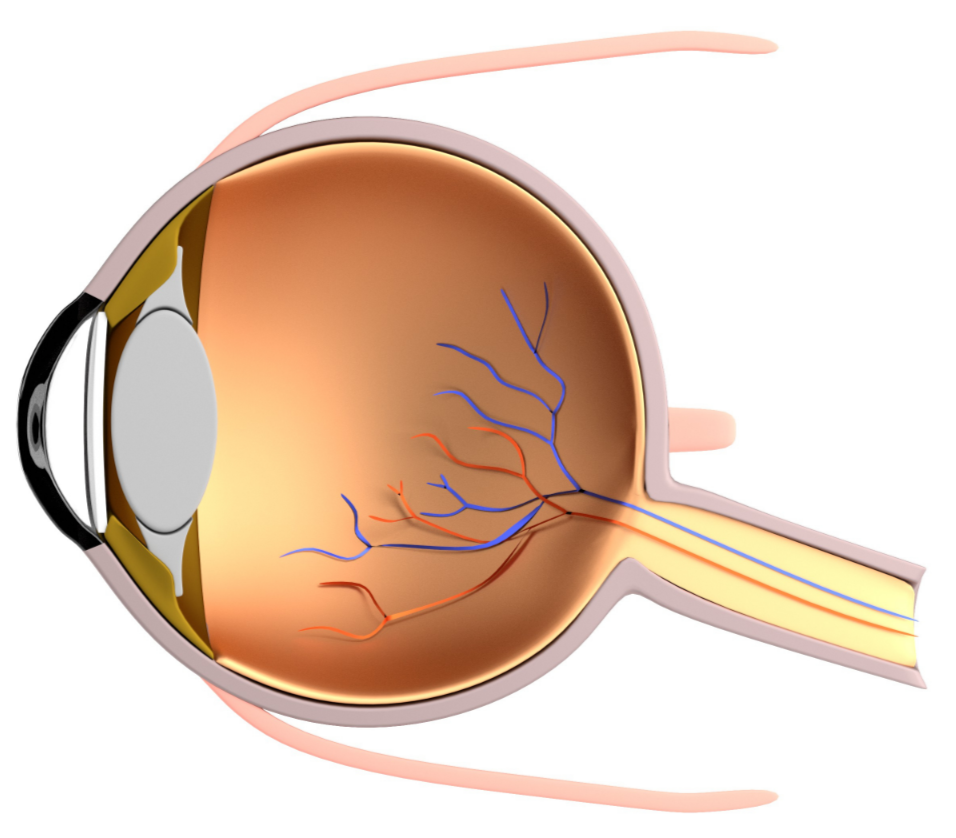
Sight, also called vision, enables people to perceive light, color, shapes, and movement through the coordinated work of the eyes and brain. Inside the eye, specialized cells convert light into signals that various brain regions interpret to help navigate and understand the world. Light enters the eye through the clear cornea, moves through the pupil—which changes size depending on lighting—and is focused by the lens onto the retina at the back of the eye.
The retina contains photoreceptor cells called rods and cones. Rods are highly sensitive and allow vision in low light but do not detect color. Cones detect color in bright light and provide detailed central vision. These photoreceptors convert light into electrical signals that travel along the optic nerve to the brain.
The occipital cortex processes information such as color, motion, shape, depth, and facial recognition. It transforms these signals into images and supports recognition and emotional responses. This process is dynamic, with factors like attention and emotion influencing how visual information is perceived.
Approximately 80% of sensory impressions come through sight, making it essential for navigation, social interaction, and learning. Visual cues like color and shape inform important decisions, such as selecting fresh vegetables or avoiding danger. Sight also works closely with other senses, especially balance and spatial orientation, to support overall perception.
Vision relies on the coordinated function of several key parts of the eye and brain:
Cornea allows and directs light into the eye
Iris and pupil regulate the amount of light entering the eye.
Lens is to focus image on the retina and adjusts for distance.
Retina converts light into nerve impulses via rods and cones.
Optic nerve transmits visual signals to the brain.
Visual cortex process and interpret images.
Touch
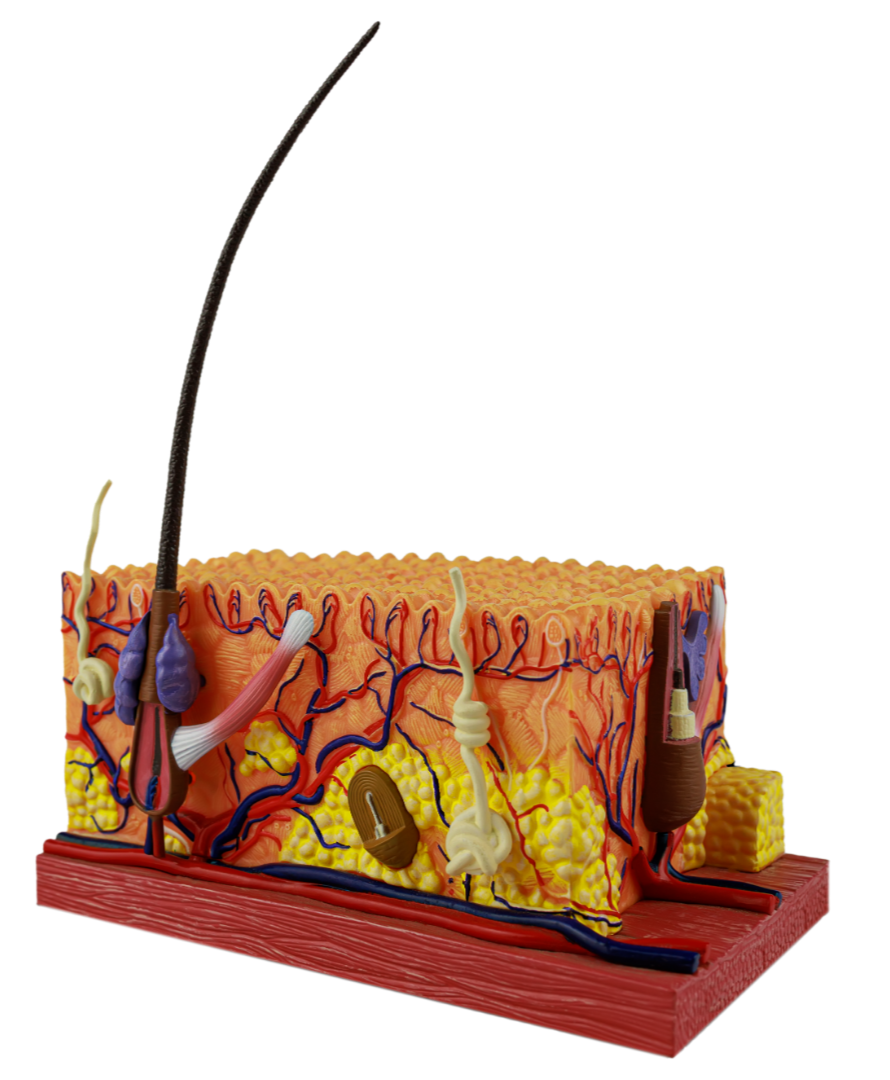
There are four primary types of touch receptors in the skin:
Mechanoreceptors, which detect pressure, vibration, and texture
Thermoreceptors, which sense temperature
Pain receptors, also called nociceptors, which register pain
Proprioceptors, which provide information about body position and movement
These receptors generate electrical signals that travel through sensory nerves to the spinal cord, then the thalamus, and finally reach the somatosensory cortex in the brain, where the signals are interpreted. Body areas with high receptor density, such as the lips, hands, and face, occupy larger regions in the sensory cortex, as shown in the sensory homunculus map.
Some touch receptors adapt quickly, allowing detection of changes like vibration or tickling, while others respond more slowly to continuous pressure or texture. Regions with many receptors, like fingertips, can differentiate two stimuli just millimeters apart, whereas less sensitive areas, like the back, require greater spacing to perceive distinct stimuli.
The sense of touch plays a crucial role in sensing pain, temperature, and pressure, supporting protective reflexes and social connections. It is essential for spatial awareness, fine motor skills, and emotional bonding — from feeling a gentle touch to reacting to injury. Through its complex network of receptors and pathways, touch enables meaningful interaction with the environment and helps regulate bodily functions and emotional well-being.
Hearing
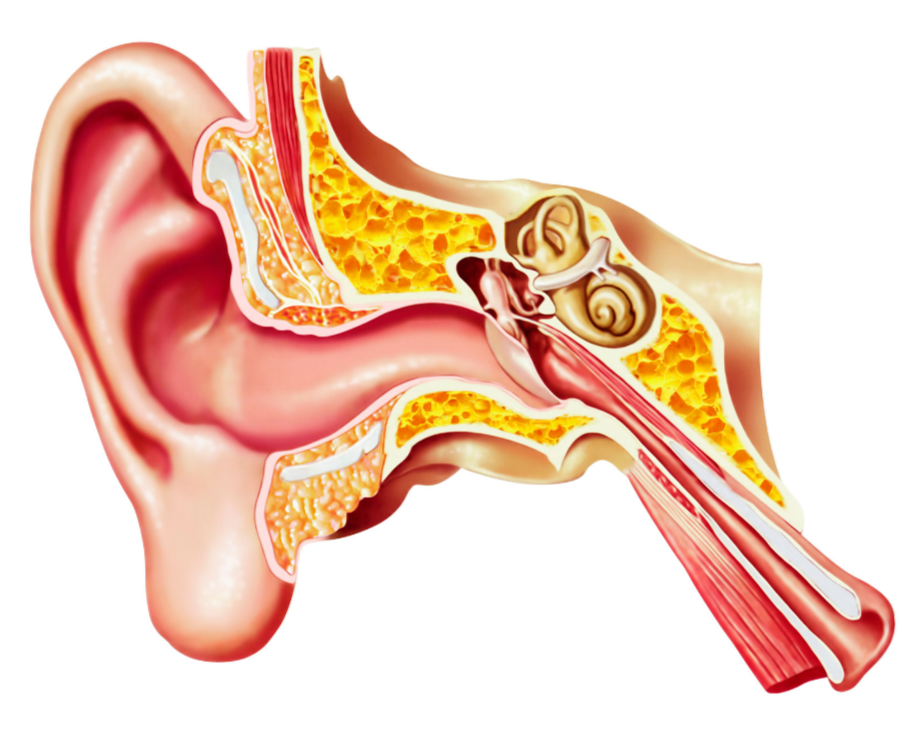
Hearing, or the auditory sense, allows us to detect sounds by converting vibrations into nerve impulses that the brain interprets. This complex process involves the outer, middle, and inner ear working together seamlessly. Sound waves travel through the air into the ear canal, causing the eardrum to vibrate. These vibrations are amplified by three tiny bones in the middle ear—the malleus (hammer), incus (anvil), and stapes (stirrup). The stapes presses against the oval window of the cochlea, a fluid-filled spiral structure in the inner ear, transmitting mechanical energy into the cochlea.
Within the cochlea, sound waves move the fluid, causing the basilar membrane to vibrate and activate hair cells in the organ of Corti. These hair cells bend with the movement and generate electrical impulses. Different parts of the basilar membrane respond to various frequencies: the stiff base detects high-pitched sounds, while the flexible apex responds to low-pitched ones.
The hair cells convert these vibrations into electrical signals, which travel via the cochlear nerve to the brain. This system allows perception of loudness, pitch, and the ability to distinguish complex environmental sounds. The brain then processes sound for frequency, duration, and location.
Hearing is crucial for communication, recognising danger, learning, and enjoying music or social interaction. Damage to the delicate hair cells—due to aging, loud noise, or certain medications—can cause hearing loss. This intricate auditory system, combining precise anatomical structures and nerve signaling, is essential for daily life and interaction.
Taste
The sense of taste, also known as gustation, allows us to detect five basic taste qualities:
Sweet
Salty
Sour
Bitter
Umami (savory).
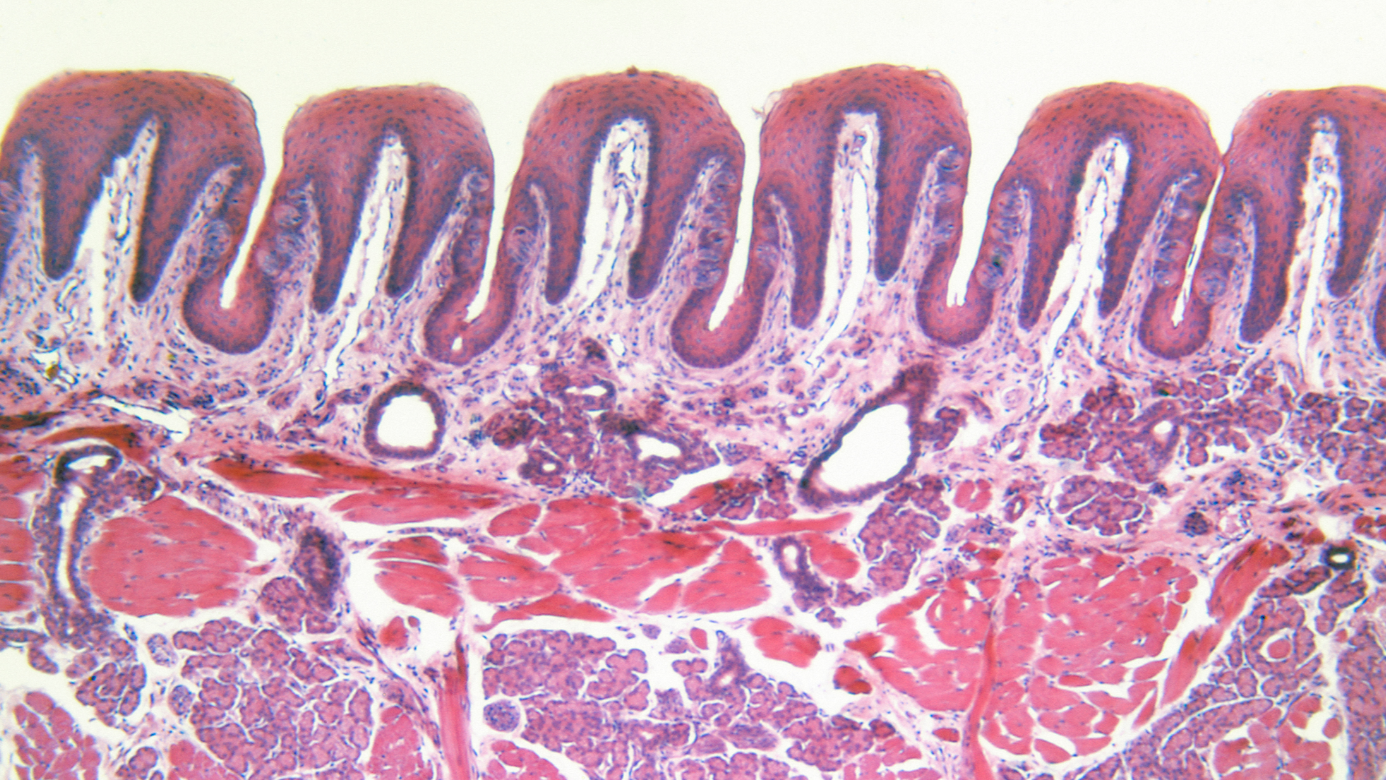
This sensation is primarily conveyed by taste buds, which are clusters of sensory cells mainly located on the tongue, but also present in parts of the mouth, throat, and upper oesophagus.
Taste buds are situated within three main types of papillae: fungiform, foliate, and circumvallate. Fungiform papillae, found mostly at the tip and sides of the tongue, are the most numerous and sensitive. Circumvallate papillae form a V-shape at the back of the tongue and contain the largest concentration of taste buds. Foliate papillae are located on the sides and rear of the tongue. Each taste bud comprises 10 to 50 sensory cells clustered around a taste pore.
When food enters the mouth, chemicals dissolve in saliva and enter the taste pore, where they interact with proteins on specialized taste hairs. This interaction triggers the sensory cells to generate signals that are transmitted through several cranial nerves to the brain. These signals first reach the brainstem and are then relayed to higher brain centers that integrate taste with smell, touch, and temperature to form the perception of flavour.
Taste plays a critical role in evaluating food quality, avoiding toxins (as bitterness often signals danger), and guiding nutritional intake. Taste buds regenerate every 7 to 14 days, although their numbers decline with age, affecting taste sensitivity. Taste works closely with the olfactory system to create the full sensation of flavour, and factors like temperature and texture can influence taste perception.
Overall, the sense of taste is a sophisticated chemosensory system that combines anatomical specialisation and molecular recognition to guide essential behaviours like eating and drinking.
Smell
The sense of smell, or olfaction, is a chemical sense that detects odorant molecules in the air and translates them into electrical signals for the brain to interpret. The olfactory system is unique because it bypasses typical sensory relay centers in the brain, connecting closely with areas involved in memory and emotion.
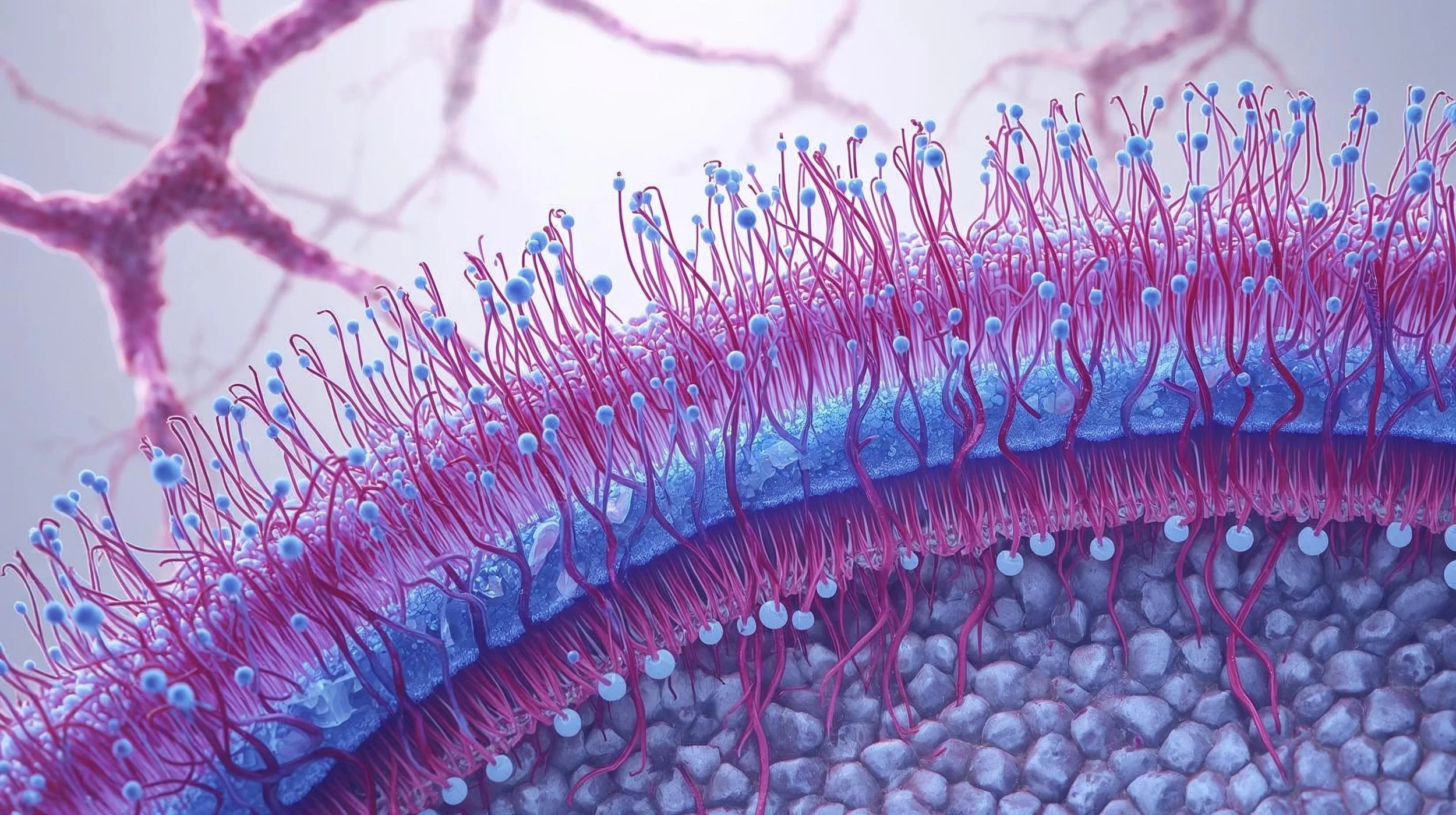
The primary structure for smell is the olfactory epithelium, located high in the nasal cavity. This tissue contains millions of olfactory receptor neurons, each equipped with cilia (tiny hair-like structures) that trap odour molecules dissolved in mucus. Each neuron expresses one type of protein receptor and detects specific odorant molecules. Supporting cells help maintain the epithelium, while basal cells replace old receptor cells throughout life.
Odorant molecules reach the olfactory epithelium by inhalation (orthonasal pathway) or through the back of the mouth while eating (retronasal pathway). These molecules dissolve in the mucus lining the cavity and bind to receptors on the cilia of olfactory neurons. When binding occurs, an electrical impulse is generated and sent through the neuron’s axon.
Neurons send signals to the olfactory bulb, where they connect with mitral and tufted cells in specialised areas called glomeruli. From there, the information travels through the olfactory tract directly to the olfactory cortex and to regions such as the amygdala and hippocampus, which are critical for emotions and memory.
This direct connection helps explain why smells can trigger vivid memories and strong feelings.
Olfactory System Features
Humans have around 400 types of olfactory receptors, which work together in combinations to recognise thousands of different odours.
Olfactory cells regenerate regularly, but smell sensitivity can decline with age or due to illness.
The system allows rapid and complex discrimination between a large variety of chemicals, aiding survival and social interaction.
The sense of smell is a refined chemosensory system, linking the detection of odorants with critical mental and emotional functions, and enabling humans to navigate their environment and social life efficiently.
Three other senses
There are three additional senses proprioception, vestibular and interoception. Proprioception is body awareness; vestibular is balance and spatial orientation, and interoception is perception and understand of what is inside the body perceive and understand what is happening inside the body.
All the above senses contribute to the overall sensory experience.